
Historical sources on Indian Independence and the Partition
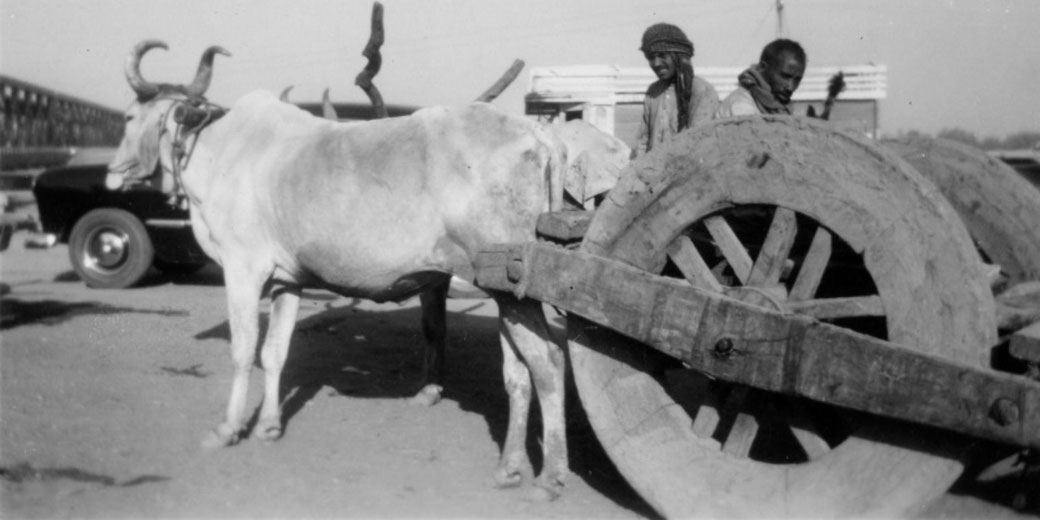
The independence of India in 1947 brought an end to British rule over the Indian subcontinent after almost two centuries, yet freedom arrived alongside the controversial partition of the region into the new nations of India and Pakistan.
The events of 1947 were accompanied by political negotiations, communal violence, mass migration, and the displacement of millions of people.
The sources on this page examine these dramatic developments through speeches by leading figures such as Jawaharlal Nehru and Muhammad Ali Jinnah, official government documents, diplomatic reports, and later accounts of the continuing consequences of partition.
Source 1
Extract A
"Long years ago we made a tryst with destiny, and now the time comes when we shall redeem our pledge, not wholly or in full measure, but very substantially. At the stroke of the midnight hour, when the world sleeps, India will awake to life and freedom. A moment comes, which comes but rarely in history, when we step out from the old to the new, when an age ends, and when the soul of a nation, long suppressed, finds utterance. It is fitting that at this solemn moment we take the pledge of dedication to the service of India and her people and to the still larger cause of humanity."
Extract B
"There is no resting for any one of us till we redeem our pledge in full, till we make all the people of India what destiny intended them to be. We are citizens of a great country, on the verge of bold advance, and we have to live up to that high standard. All of us, to whatever religion we may belong, are equally the children of India with equal rights, privileges and obligations. We cannot encourage communalism [religious conflict between communities] or narrow-mindedness, for no nation can be great whose people are narrow in thought or in action. To the nations and peoples of the world we send greetings and pledge ourselves to cooperate with them in furthering peace, freedom and democracy. And to India, our much-loved motherland, the ancient, the eternal and the ever-new, we pay our reverent homage and we bind ourselves afresh to her service. Jai Hind."
Contextual information:
Jawaharlal Nehru was India's first Prime Minister and a central figure in the independence movement. He delivered this speech to the Constituent Assembly of India at midnight on 14-15 August 1947, the precise moment Britain formally transferred power, creating the new nation of India. The Republic of India framed its own constitution, which came into force in January 1950, replacing the status of a British dominion with that of an independent republic.
Bibliographical reference:
Nehru, J. (1950). A tryst with destiny. In Constituent Assembly Debates Report, Book 1 (n.p.). Government of India. (Original speech delivered 14-15 August 1947)
Copyright: Public domain.
Source 2
Extract A
"Mr. President, Ladies and Gentlemen! I cordially thank you, with the utmost sincerity, for the honour you have conferred upon me — the greatest honour that is possible to confer — by electing me as your first President. I also thank you for the trust you have reposed in me and I hope you will find me worthy of that trust. The Constituent Assembly has got two main functions to perform. The first is the very onerous [very heavy and demanding] and responsible task of framing the future constitution of Pakistan and the second of functioning as a full and complete sovereign [self-governing] body as the Federal Legislature of Pakistan. We have to do the best we can in adopting a provisional constitution for the working of the Government and the Constituent Assembly. Like all other Governments, our main function will be, in the first place, to maintain law and order, so that the life, property and religious beliefs of its subjects are fully protected by the State."
Extract B
"A division had to take place. On both sides, in Hindustan [India] and Pakistan, there are sections of people who may not agree with it, who may not like it, but in my judgement there was no other solution and I am sure future history will record its verdict in favour of it. And what is more, it will be proved by actual experience as we go on that was the only solution of India's constitutional problem."
Contextual information:
Muhammad Ali Jinnah was the founder of Pakistan and president of the All-India Muslim League, the party that campaigned for a separate Muslim homeland. He delivered this address in Karachi on 11 August 1947, three days before Pakistan's formal independence on 14 August 1947. The speech established Pakistan's new parliament and is preserved through contemporary newspaper transcripts, including the Dawn newspaper of 14 August 1947.
Bibliographical reference:
Jinnah, M. A. (1947, August 11). Presidential address to the Constituent Assembly of Pakistan. National Assembly of Pakistan. https://www.na.gov.pk/en/content.php?id=74
Copyright: Public domain.
Source 3
"As from the fifteenth day of August, nineteen hundred and forty-seven, two independent Dominions [self-governing nations within the British Empire] shall be set up in India, to be known respectively as India and Pakistan."
Contextual information:
The Indian Independence Act 1947 was passed by the British Parliament and received Royal Assent on 18 July 1947. It is the foundational legal document that formally created the independent nations of India and Pakistan, ending nearly two centuries of British rule over the Indian subcontinent. Section 1 of the Act set the date of independence and established the legal basis for partition.
Bibliographical reference:
Indian Independence Act 1947, 10 & 11 Geo. 6, c. 30, § 1. Parliament of the United Kingdom. https://www.legislation.gov.uk/ukpga/Geo6/10-11/30/contents
Copyright: Available for reproduction under the UK Open Government Licence v3.0.
Source 4
Extract A
"The League reacted by withdrawing their acceptance of the mission's proposals, by reverting to the advocacy of the full Pakistan claim in provocative form, and by threatening direct action. Six months have passed without any substantial progress in drawing up the constitution and the Constituent Assembly is meeting without Muslim League representatives."
Extract B
"The communal situation deteriorated seriously between August and November and over 10,000 persons have been killed and many more injured. Since the London Conference the situation has improved but the tension is still high. Any open and irrevocable [impossible to take back] breach between the parties might lead to a widespread recrudescence [renewed outbreak] amounting almost to unorganised and spontaneous civil war. In this event the Indian army might disintegrate [fall apart] and take sides."
Contextual information:
This document is a top-secret memorandum handed by the British Ambassador, Lord Inverchapel, to the United States Secretary of State on 20 February 1947. It summarises the British government's assessment of the collapse of negotiations between the Indian National Congress and the Muslim League following the 1946 Cabinet Mission. The document was written in the aftermath of Direct Action Day, 16 August 1946, when Muhammad Ali Jinnah of the Muslim League called a general strike and day of protest across India. Violence broke out, particularly in Calcutta, killing between 4,000 and 10,000 people, and the communal killings continued across Bengal, Bihar, and other provinces through late 1946. Historians now estimate the total partition death toll at somewhere between 200,000 and 2,000,000.
Bibliographical reference:
British Embassy. (1947, February 19). Memorandum to the Department of State [Document 91]. In Foreign Relations of the United States, 1947: The British Commonwealth; Europe (Vol. III, pp. 145-147). U.S. Government Printing Office. https://history.state.gov/historicaldocuments/frus1947v03/d91
Copyright: Public domain.
Source 5
Extract A
"Friends and Comrades, The light has gone out of our lives and there is darkness everywhere. I do not know what to tell you and how to say it. Our beloved leader, Bapu as we called him, the Father of the Nation, is no more. Perhaps I am wrong to say that. Nevertheless, we will never see him again as we have seen him for these many years. We will not run to him for advice and seek solace [comfort] from him, and that is a terrible blow, not to me only, but to millions and millions in this country. And it is a little difficult to soften the blow by any other advice that I or anyone else can give you."
Extract B
"A madman has put an end to his life, for I can only call him mad who did it [Nathuram Godse, a Hindu nationalist who shot Gandhi three times at close range at a prayer meeting in Birla House, New Delhi, on 30 January 1948], and yet there has been enough of poison spread in this country during the past years and months, and this poison has had an effect on people's minds. We must face this poison, we must root out this poison, and we must face all the perils that encompass [surround] us, and face them not madly or badly, but rather in the way that our beloved teacher taught us to face them."
Contextual information:
Jawaharlal Nehru delivered this speech as a live radio broadcast on All India Radio on the evening of 30 January 1948, within hours of Mahatma Gandhi's assassination. Nehru spoke without preparation, directly to the Indian public. In it he used the title "Father of the Nation" for Gandhi, a title Gandhi had been known by at least since 1944 when independence leader Subhas Chandra Bose addressed him publicly by that name.
Bibliographical reference:
Nehru, J. (1948, January 30). The light has gone out of our lives [Radio broadcast transcript]. All India Radio, New Delhi.
Copyright: Public domain.
Source 6
"Embassy advised by UK High Commissioner's office that it has been informed HMG [His Majesty's Government, meaning the British government] believes feeling so strong between GOI [Government of India] and GOP [Government of Pakistan] regarding Kashmir issue that recourse UN [referring the matter to the United Nations] only feasible solution. GOP is in very difficult military position Kashmir with little hope success under present conditions supply and communications between India and Kashmir. GOI is deeply committed to support of Sheikh Abdullah and withdrawal from present position impossible from view prestige. GOP realizes difficulties GOI and will be correspondingly unyielding. Embassy views situation with grave concern and can see no solution other than appeal to UN by GOI. Only hopeful indication is Bajpai's statement to me that after withdrawal raiders GOI will abide by its previous statement agreeing to plebiscite [a public vote to decide which country Kashmir should join] Kashmir under international auspices [oversight]."
Contextual information:
This telegram was sent from the United States Embassy in New Delhi to the Secretary of State in Washington on 30 December 1947. The Kashmir dispute arose immediately after partition, when the Maharaja of the princely state of Jammu and Kashmir signed the Instrument of Accession to India in October 1947, despite the majority of the population being Muslim. Pakistan disputed this accession and a war between India and Pakistan began. The Jammu and Kashmir border dispute has never been fully resolved and remains a source of conflict between India and Pakistan to this day.
Bibliographical reference:
U.S. Embassy, New Delhi. (1947, December 30). Telegram to the Secretary of State [Document 125]. In Foreign Relations of the United States, 1947: The British Commonwealth; Europe (Vol. III). U.S. Government Printing Office. https://history.state.gov/historicaldocuments/frus1947v03/d125
Copyright: Public domain.
Source 7
Extract A
"In 1971, an internal crisis in Pakistan resulted in a third war between India and Pakistan and the secession [separation and creation of a new country] of East Pakistan, creating the independent state of Bangladesh."
Extract B
"Defeated on both fronts, Pakistan was forced to accede [agree] to the establishment of an independent Bangladesh in place of East Pakistan."
Contextual information:
This text is drawn from the Office of the Historian's official Milestones series, published by the United States Department of State. The 1971 Bangladesh Liberation War began when East Pakistan, separated from West Pakistan by over 1,600 kilometres of Indian territory, declared independence after the Pakistani Army launched a military crackdown. The two parts of Pakistan had long been in tension over language, political representation, and economic resources. India intervened militarily in support of East Pakistan's independence movement, defeating Pakistani forces and directly creating the conditions for Bangladesh's emergence as a separate nation.
Bibliographical reference:
U.S. Department of State, Office of the Historian. (n.d.). The South Asia crisis and the founding of Bangladesh, 1971. In Milestones in the history of U.S. foreign relations. https://history.state.gov/milestones/1969-1976/south-asia
Copyright: This is a work of the United States Government and is in the public domain under 17 U.S.C. § 105.